
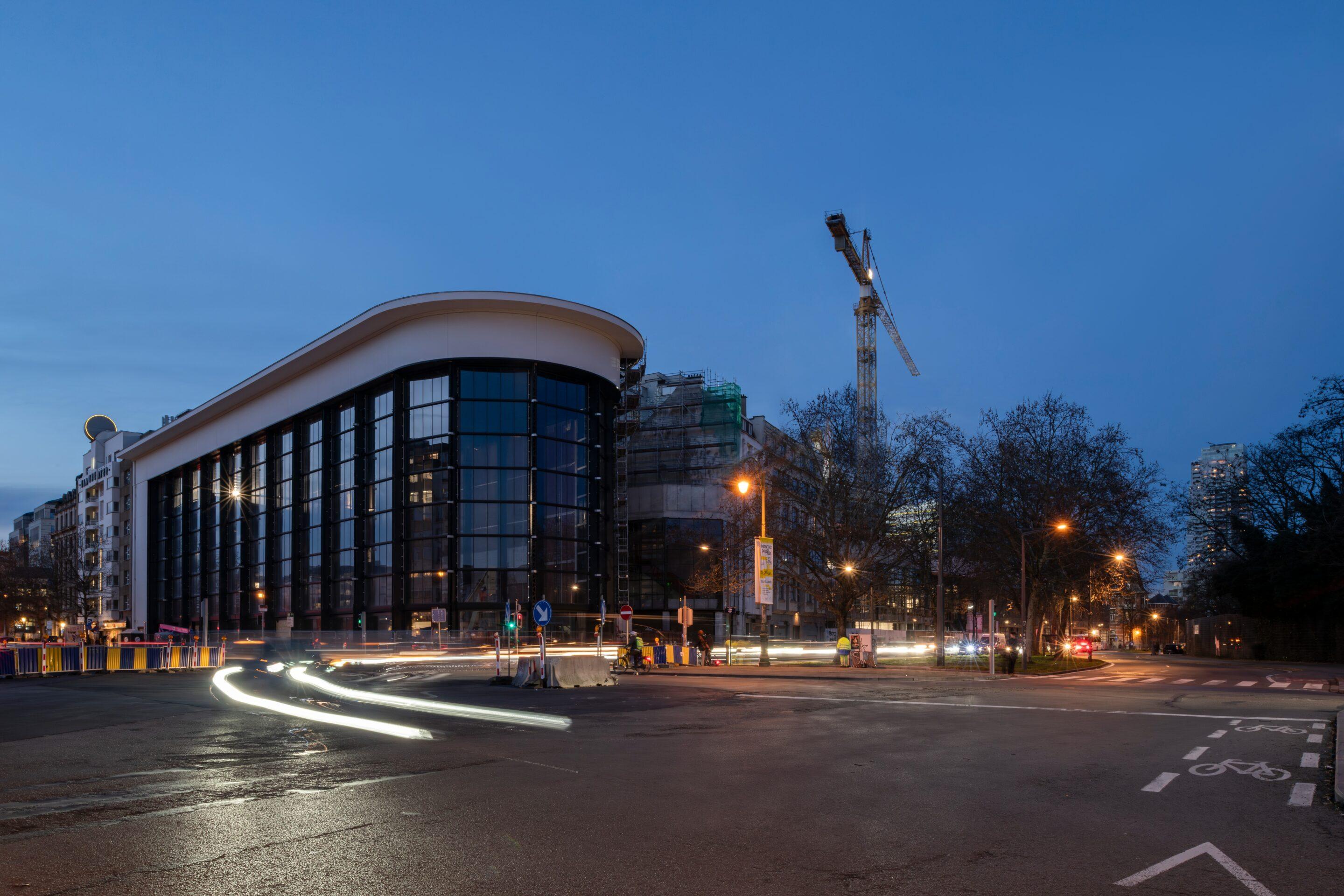
Brussels is preparing to open one of the most ambitious cultural projects in Europe this year. Kanal-Centre Pompidou, housed in a former Citroën garage beside the canal, will bring together two museums, public gathering spaces, shops and a waterside restaurant under a single vast modernist roof. The €230 million development is intended to become a landmark and a catalyst for the regeneration of the canal district and the North Quarter.
The site covers 1.7 hectares and contains 44,000 square metres of space, much of it inside the restored 1934 garage designed by architects Alexis Dumont and Marcel Van Goethem. Almost half of the building will be freely accessible, including a playground, rooftop bar and areas beneath the immense industrial roof. The project was conceived and funded by the Brussels-Capital Region, which hopes that culture can drive economic and social renewal in an area that has long struggled with industrial decline.
Two museums under one roof
Kanal will contain museums of modern and contemporary art and of architecture, landscape and urban ecosystems. Because the Brussels Region does not have a national collection of its own, it has signed a five-year agreement with Paris's Centre Pompidou to borrow works from French state holdings while building its own collection. The opening programme will feature ten exhibitions at once, including a headline show called A Truly Immense Journey that traces the layered history of the site.
Kasia Redzisz, Kanal's artistic director and formerly a curator at Tate Modern and Tate Liverpool, says the new institution fills an enormous gap in the city's cultural life. Brussels has eleven art schools but, until now, no museum dedicated to modern and contemporary art connected to the city's own scene. "We don't want to just show novelty art," she says. "We need to create a certain context for artists practising in the city."
Five centuries of reinvention
The Kanal block is one of the most repeatedly transformed sites in Brussels. In 1561 the Willebroeck canal was inaugurated here, connecting the city to the Scheldt river, Antwerp and the North Sea. A tree-lined promenade, the Allée Verte, later drew crowds as a Sunday escape. The first railway linking Brussels to Mechelen terminated nearby in 1835, and a second canal to the Charleroi coalfields arrived in 1832, reshaping the neighbourhood with warehouses, railways and industry.
In 1913 a funfair called Luna Park opened on the block, complete with a scenic railway, water chute and a 1,000-seat theatre. Its run was cut short by the First World War, when the site was used as a pig farm and then a factory making soldiers' knapsacks. Then in 1933 Citroën acquired the land and built its spectacular garage, a palace of glass and steel designed to make the motor car look like the future.