
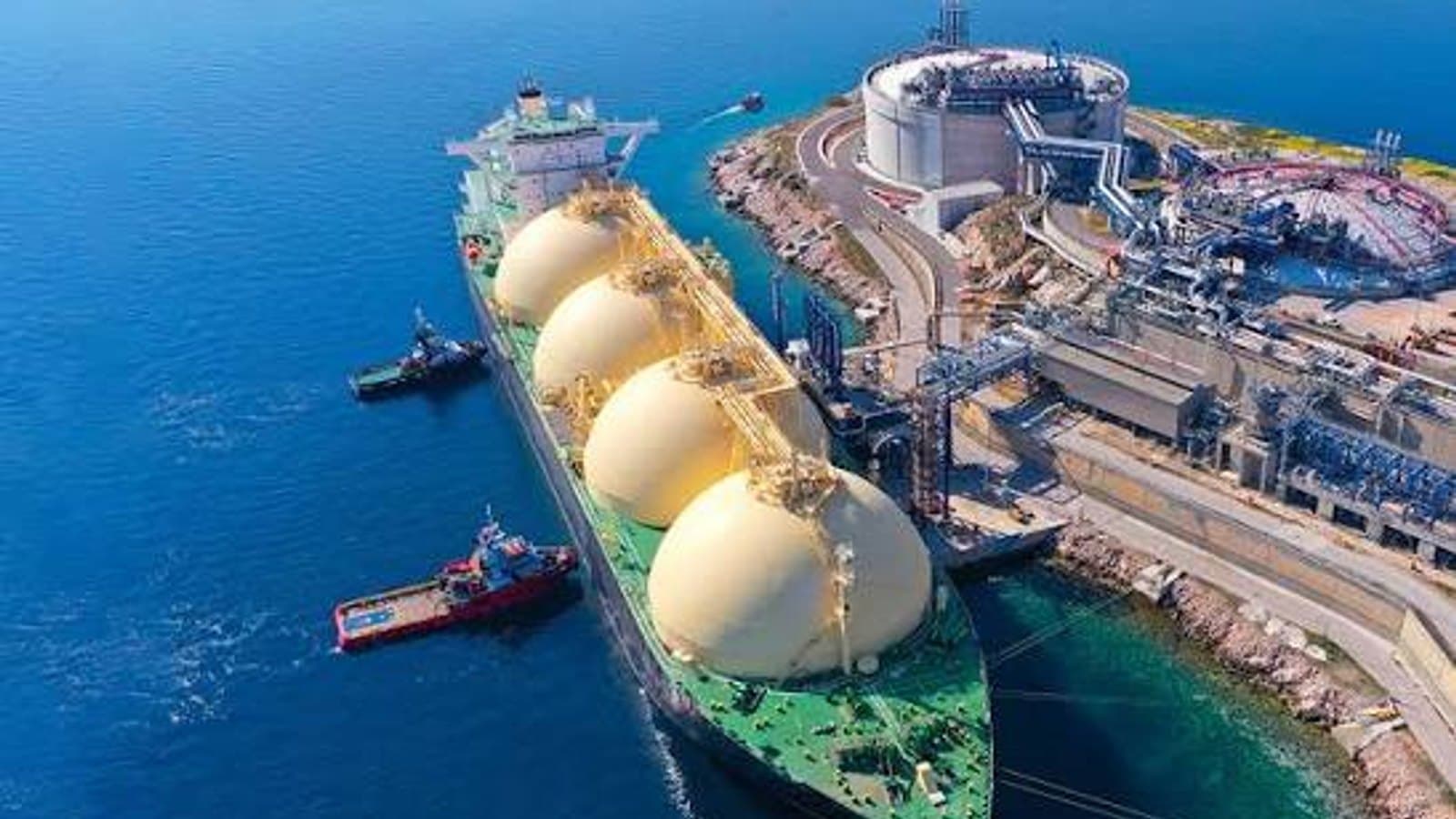
Belgium's July LNG imports, all of them Russian and down about 40 percent in total on the year, have been picked up well beyond the Belgian press. The framing outside the country is not about Belgian volumes. It is about the gap between what the European Union has legislated and what it is still buying while the legislation waits to take effect.
The dates are the fixed points. A full ban on Russian LNG imports takes effect in January 2027, and short term contracts have already been barred. Between now and then every cargo is legal, and every cargo is also an argument, which is why a single month of Belgian import data has become a talking point rather than a statistic.
The figures being cited around it come from campaign groups and news agency analysis rather than from official statistics, and are worth attributing rather than repeating flat. On those numbers the Union paid Russia something in the order of 7.2 billion euros for LNG during 2025, and European purchases in the first half of this year ran above the same period a year earlier rather than below it. Greenpeace analysis reported alongside the Belgian data puts four countries, France, Belgium, Spain and the Netherlands, at roughly 34 billion euros of Russian LNG purchases since 2022. Numbers of that kind are constructed from assumptions about price and destination and should be read as estimates, not as accounts.
The mechanism behind the awkward direction of travel is the one worth understanding, and it is not bad faith. Disruption to shipping through the Strait of Hormuz has cut Middle Eastern supply into Europe and pushed prices up. When spot cargoes get expensive, buyers fall back on what they are contractually committed to, and long term contracts are where the remaining Russian volume sits. A policy that bans short term contracts first therefore squeezes the flexible half of the trade and leaves the contracted half running until the full ban lands.
The Belgian position in this is more specific than the headline suggests. Zeebrugge is a regasification and transshipment hub, so a cargo landing in Belgium is not necessarily gas a Belgian household burns, and the country also draws pipeline gas from Norway and the United Kingdom. Belgium is not dependent on Russia for its gas. In July it was dependent on Russia for its LNG, and both sentences are true at once.
None of which makes the criticism unfair. A country that hosts a hub of that size is not a passive location: it earns from the throughput, and the terminal capacity is what makes the contracts worth holding. The honest version of the Belgian answer is that the ban has a date, the date was agreed collectively, and until it arrives the trade is lawful. Whether that is a good enough answer is a political question rather than a technical one, and it is the question the next five months will be spent on.