
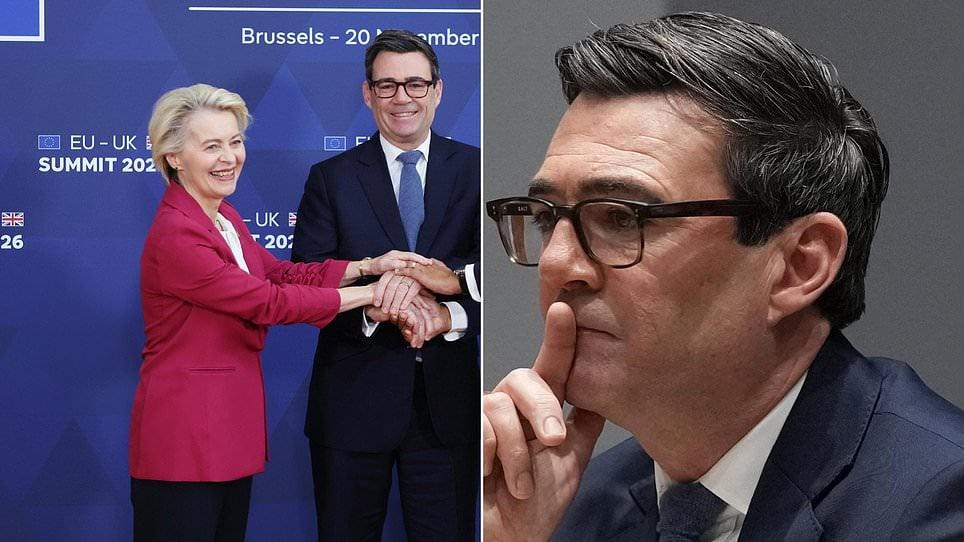
The United Kingdom and the European Union have struck a sweeping post-Brexit reset at a summit in Brussels, easing friction in food trade, linking carbon markets and opening a youth mobility scheme. Prime Minister Andy Burnham called the package a win-win for both sides, while EU leaders described it as a turning point in the relationship.
But the warm optics of handshakes and joint press statements were complicated by a last-minute dispute over university tuition fees. EU officials warned that some elements of the agreement might not take effect unless Britain agrees to charge EU students the same rates as domestic students, a move that could cost taxpayers close to £500 million a year.
What the deal covers
The agreement includes three main pillars. The first is a sanitary and phytosanitary deal that aligns British food and plant rules more closely with the EU, reducing border checks and paperwork. Officials estimate this could add more than £5 billion a year to the economy by making it easier to export food and agricultural products.
The second pillar links the UK to the EU's emissions trading system, protecting British exporters from carbon border charges when selling into the bloc. The government says this could deliver an annual boost of around £3.8 billion.
The third is a youth mobility scheme that could allow roughly 100,000 young Europeans to work temporarily in the UK each year. That number is double the 50,000 cap the government had originally suggested, a sign of how far London moved to secure a broad agreement.
The tuition fee ambush
As ministers celebrated the outline deal, EU diplomats circulated a draft statement making implementation conditional on progress over tuition fees. Since Brexit, EU students at British universities have paid international rates ranging from £11,400 to £38,000 a year, compared with the domestic cap of £9,790. Brussels wants them treated like UK students.