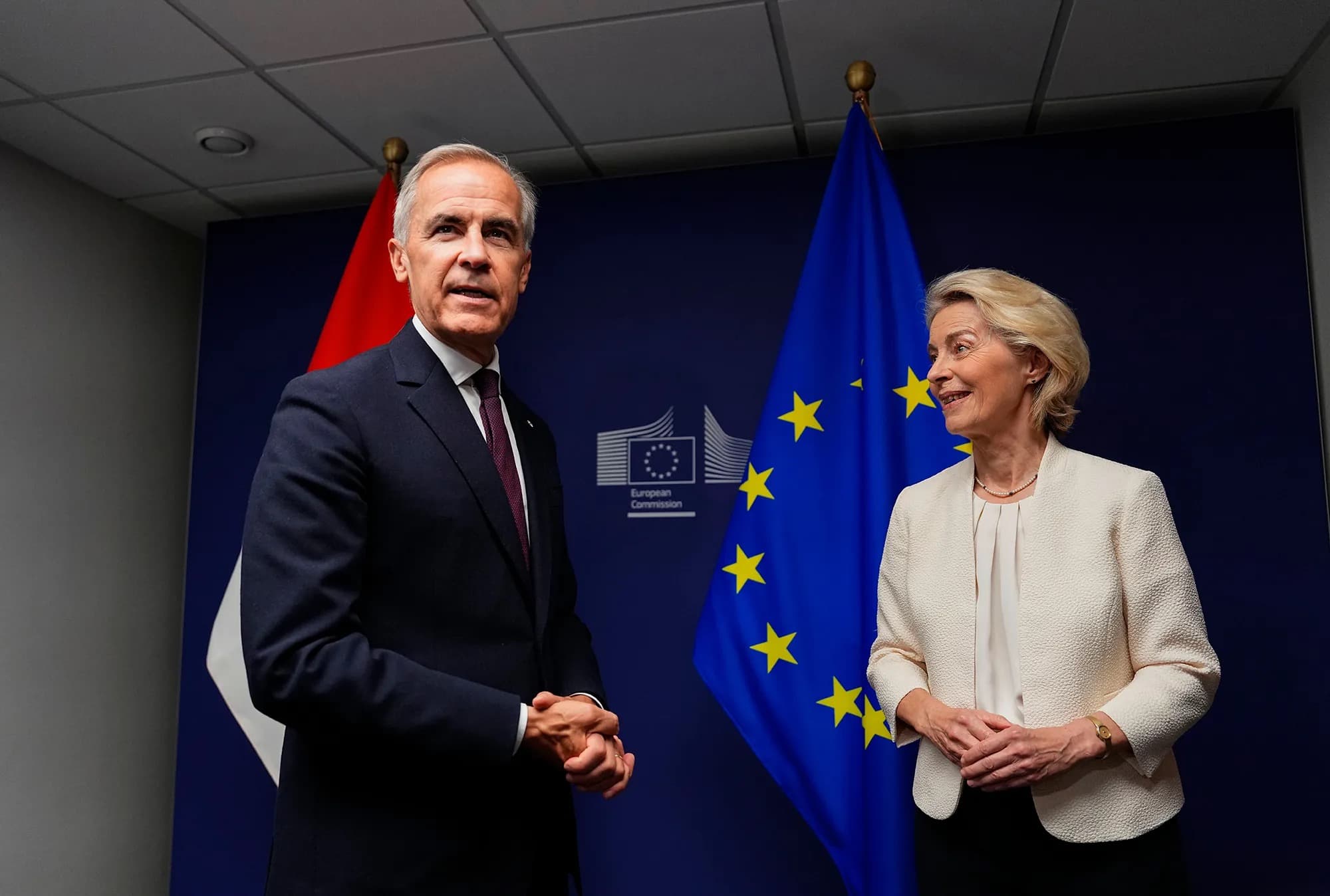
Von der Leyen and Carney to Sign a Canada EU Framework, but Not the Membership Von der Leyen Floated
Canada and the EU are set to sign a cooperation framework at a Montreal summit this week covering cloud contracts, the Galileo satellite system and critical minerals, but the 'associate membership' von der Leyen raised in September has no basis in EU law and has split member states over how to word it.
Canadian Prime Minister Mark Carney and European Commission President Ursula von der Leyen are due to sign a new cooperation framework at a Canada EU summit in Montreal on October 29 and 30, opening Canadian companies to EU cloud computing and artificial intelligence contracts, giving Canada a role in the EU's Galileo satellite system, easing European investment in Canadian critical minerals, and committing both sides to a deal for 50 Canadian built De Havilland water bombers.
Carney has described the summit as the start of a longer process rather than a finished deal, saying it marks the launch of further formal discussions and negotiations over the course of the next year. The framework being signed in Montreal is meant to set the direction for that negotiation rather than settle every detail of the relationship at once.
A membership label with no legal meaning
The word that has generated the most friction barely appears in the framework itself. In September, von der Leyen suggested the new arrangement could make Canada an associate member of the 27 country bloc, but associate membership has no definition anywhere in the treaties that make up EU law, and Canadian officials have since played down the term rather than embrace it. Germany and several other member states have resisted the designation regardless, and EU ambassadors could not agree on wording for a joint statement in the days leading up to the summit.
That disagreement over labels sits alongside a set of concrete commitments that do have legal weight, from satellite access to a multibillion dollar aircraft order aimed partly at bolstering European wildfire response capacity. Whether Brussels and Ottawa settle on a tidy name for what they are building matters less, in practical terms, than whether the harder negotiations promised for the coming year can turn Montreal's framework into enforceable commitments on both sides.