
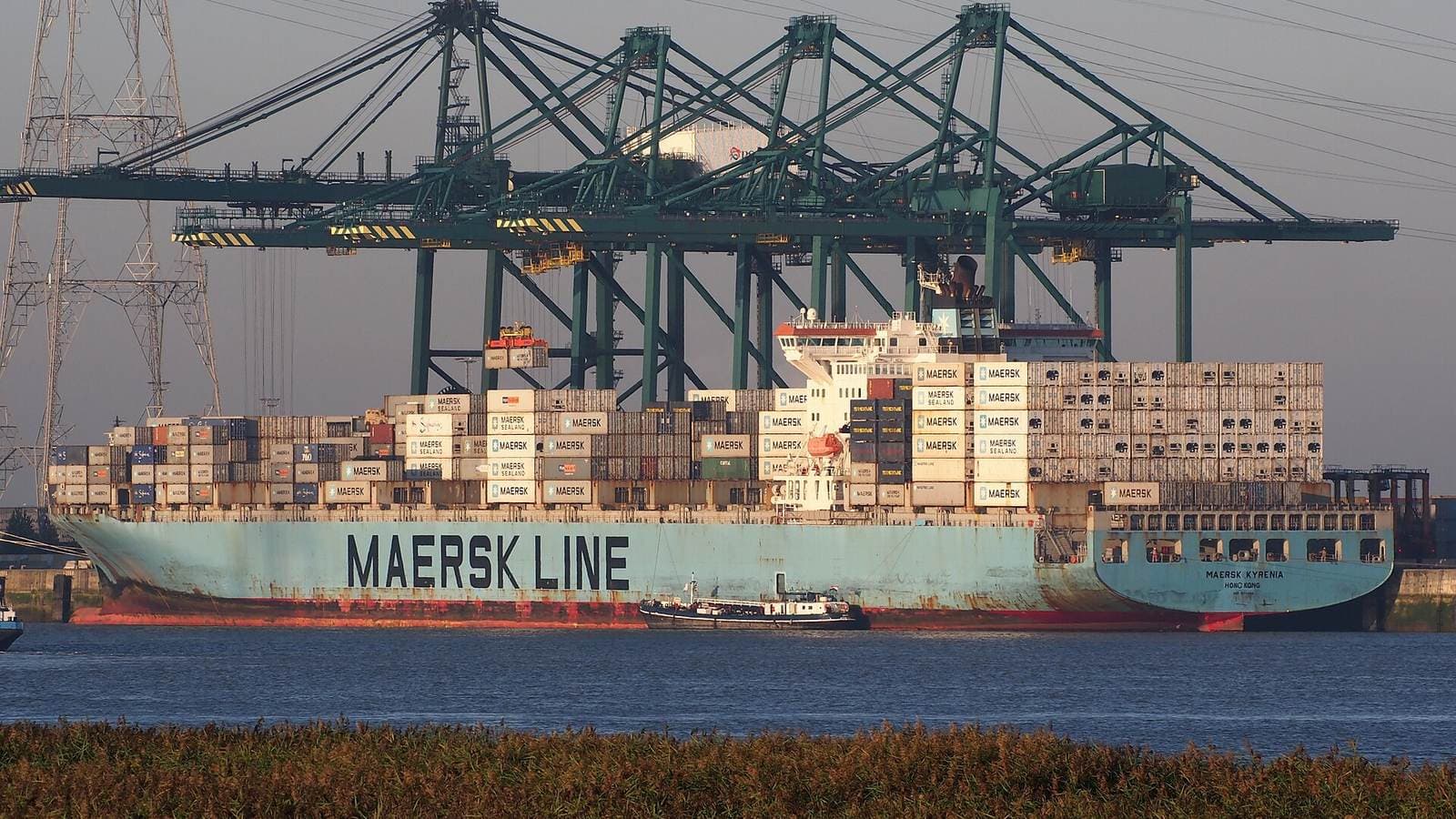
Belgium has no single dominant company in the way that some small European economies do. What it has instead is a port. Antwerp and Zeebrugge merged their port authorities in April 2022 to form Port of Antwerp-Bruges, ending a rivalry between two harbours that sit less than a hundred kilometres apart and had spent decades bidding for the same traffic.
The merger was less about growth than about arithmetic. Two mid-sized European ports competing on price is a worse position than one large port setting terms, and the two harbours were never really substitutes. Antwerp sits far inland up the Scheldt, close to the customer, and handles containers and chemicals. Zeebrugge is on the coast, which is what roll-on roll-off traffic, car carriers and liquefied natural gas need. Put together they cover a wider range of cargo than either could alone.
The chemicals cluster around Antwerp is the part that matters most for the rest of the economy. It is the largest integrated petrochemical complex in Europe and among the largest anywhere, and it is a cluster in the strict sense rather than a collection of plants that happen to be nearby. Pipelines run between sites, one operator's by-product is another's feedstock, and the shared infrastructure is what makes the location worth paying for. A firm cannot easily leave a cluster like that, which is a source of resilience and, when energy prices move, a source of exposure.
Zeebrugge carries a different kind of strategic weight. It is one of the main entry points for liquefied natural gas into north western Europe, with regasification capacity that serves a market far larger than Belgium. In an energy system that has spent several years rearranging its supply routes, a terminal with spare capacity on the North Sea coast is not a local asset.
The reason to watch the port rather than any listed company is that the port sits upstream of most of them. Chemicals, pharmaceuticals, cars and food all move through it, and the industrial belt between Antwerp and Ghent exists because it does. When the numbers coming out of the port turn, the change usually shows up in company results a quarter or two later.