
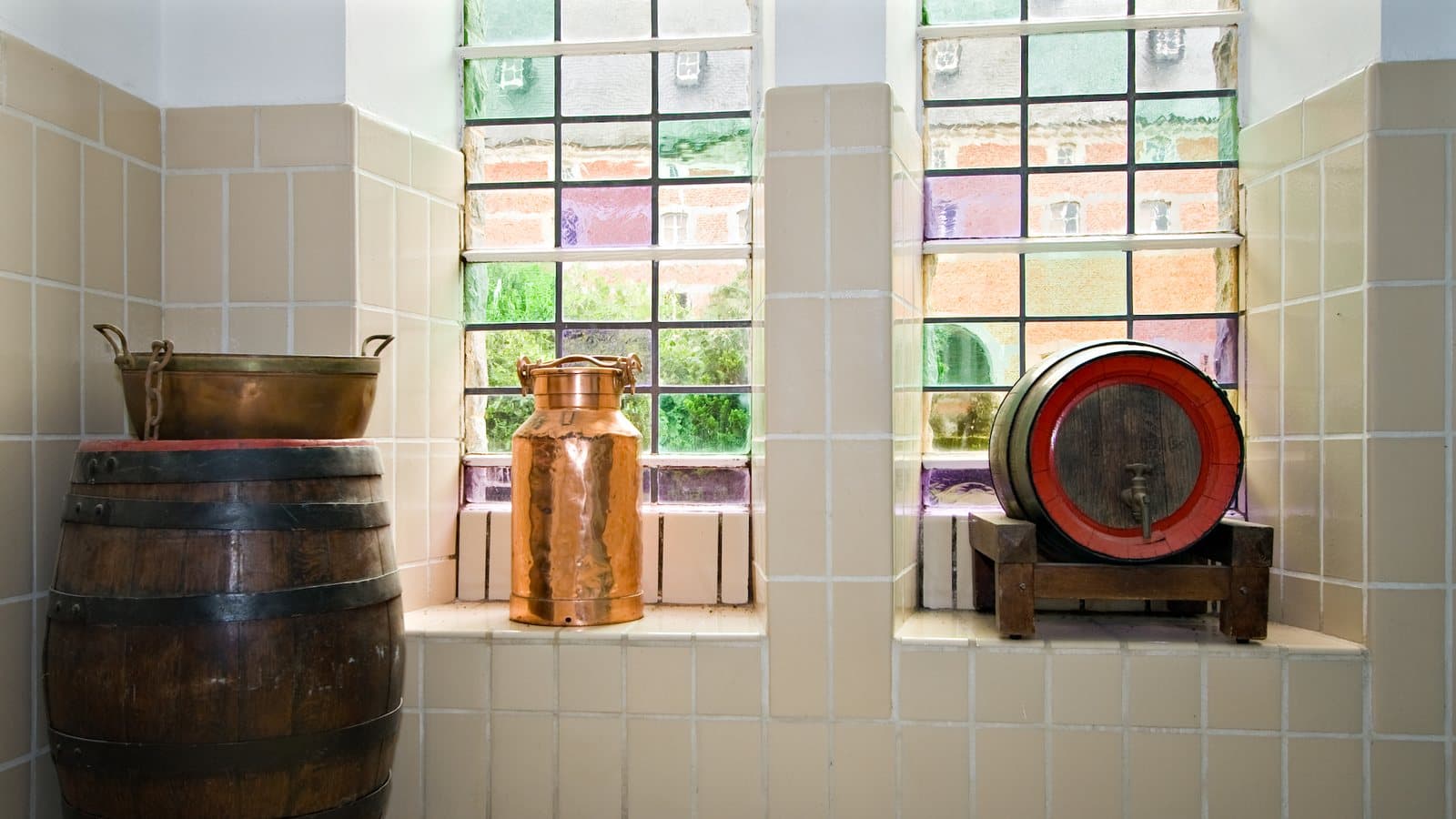
In 2016 beer culture in Belgium was inscribed on the UNESCO Representative List of the Intangible Cultural Heritage of Humanity. The wording is careful and worth reading. What was listed is the culture: brewing traditions, the practice of serving each beer in its own glass, the role of beer in meals and celebrations, and the social settings the whole thing takes place in.
The country supports an unusual variety for its size. Trappist beers are brewed within the walls of monasteries under the control of the monastic community, a designation that applies to a small number of abbeys worldwide, several of them Belgian. Lambics in the Zenne valley south west of Brussels are fermented with wild yeasts from the surrounding air rather than a pitched culture, then aged and blended into gueuze. Saisons, witbiers and strong dark ales each carry their own regional history.
The habits around the beer are as distinctive as the beer. Glassware is specific to the brand and treated as part of the product, not as marketing. Serving temperatures are warmer than in most beer cultures, which is what strong bottle conditioned ales need. Beer appears at the table with food in a role that other countries assign to wine.