
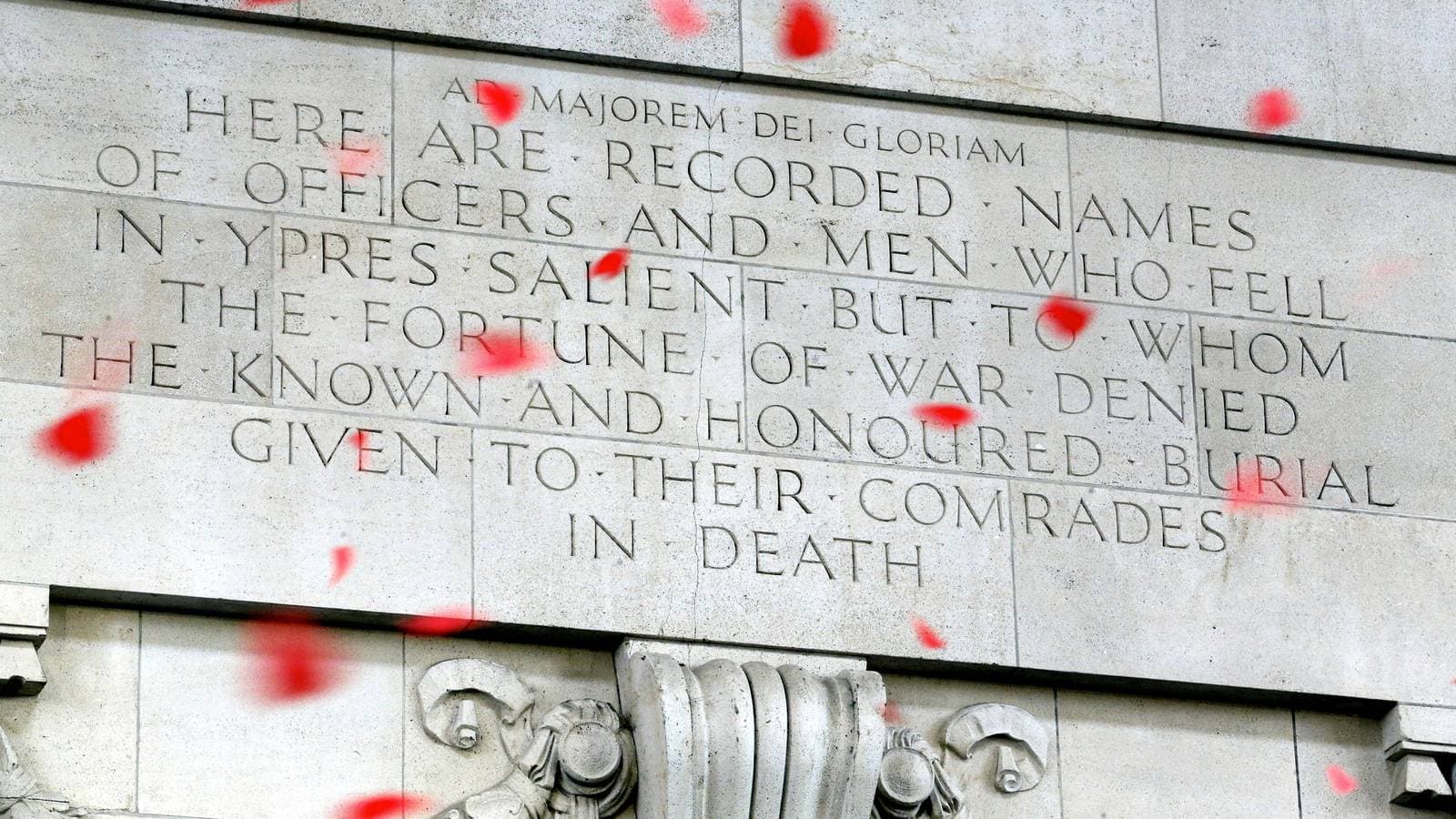
Flanders is putting 1.13 million euros towards restoring four military cemeteries at Ypres, the Flemish heritage minister Ben Weyts has announced. The sites are the Railway Dugouts Burial Ground and Bedford House Cemetery at Zillebeke, the White House Cemetery at Sint-Jan, and the Belgian Battery Corner Cemetery in Ypres itself.
What the money buys is masonry. The enclosure walls have fallen into disrepair to the point where the concern is stated as safety rather than appearance. Foundations will be repaired, walls re-pointed, and damaged bricks and coping stones replaced. Nothing in that list is visible in a photograph of a cemetery, and all of it is what keeps one standing.
The arithmetic is worth reading rather than skipping. The works are put at around 1.7 million euros. The Flemish government, through its Agency for Immovable Heritage, covers 66 percent. The Commonwealth War Graves Commission, which manages the cemeteries, will run the works and pay the rest.
That split is the institutional point. These are graves of foreign war dead on Belgian soil, maintained in perpetuity by a Commonwealth body under arrangements that go back to the 1920s, and standing on land whose heritage protection is a Flemish competence. Neither party can act alone. A repair to a boundary wall therefore needs an agreement between a regional agency in Brussels and a commission headquartered in Maidenhead, which is why a straightforward masonry job takes a ministerial announcement to start.
It also sits at the point where remembrance stops being a ceremony and becomes an estate. The Westhoek holds a very large number of these sites, they were built in the 1920s, and brick and lime mortar have a service life. Ceremonies are funded readily because they are visible. Repointing is funded late, because until a wall is unsafe there is nothing to see and nothing to photograph.