
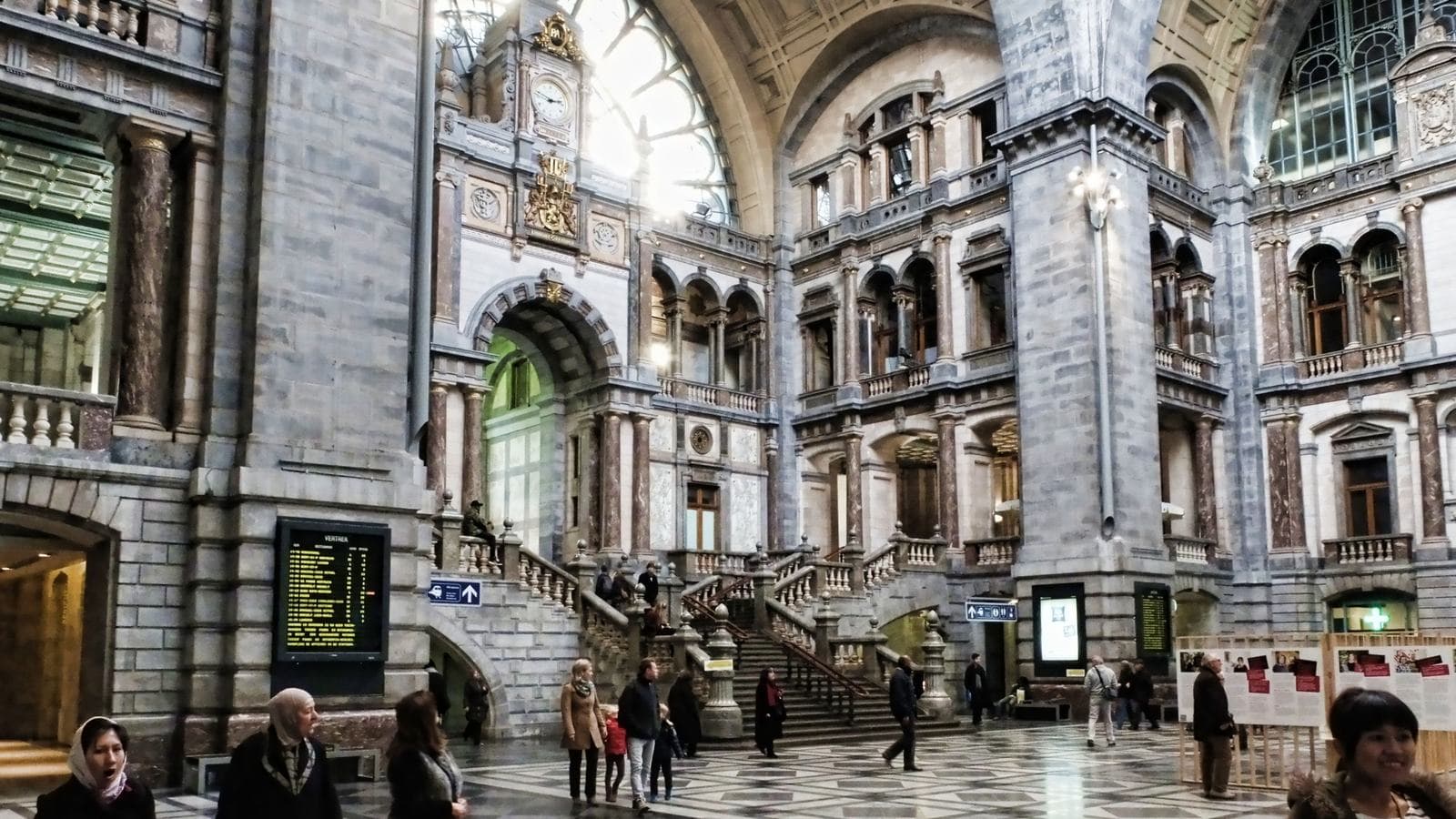
Belgium runs somewhere around 3,600 kilometres of railway in a country small enough to cross by train in a couple of hours. Measured against land area that is among the densest networks anywhere in Europe, and it means that a very high proportion of the population lives within a short distance of a station.
The density is inherited. Belgium industrialised early and built railways early, the first line on the European continent having opened between Brussels and Mechelen in 1835, and the network expanded to serve coal, steel and textile towns that in many cases no longer have the industry that justified the line. Closing a station in a country this small is politically difficult, because almost every station is somebody's only station.
The advantage is real. Commuting into Brussels, Antwerp and Ghent by rail is practical in a way it is not in most European countries of comparable size, season tickets are widely used, and employers routinely cover them. High speed connections to Paris, London, Amsterdam and Cologne all run from central Brussels, which puts four capitals within a few hours of a station most Belgians can reach.