
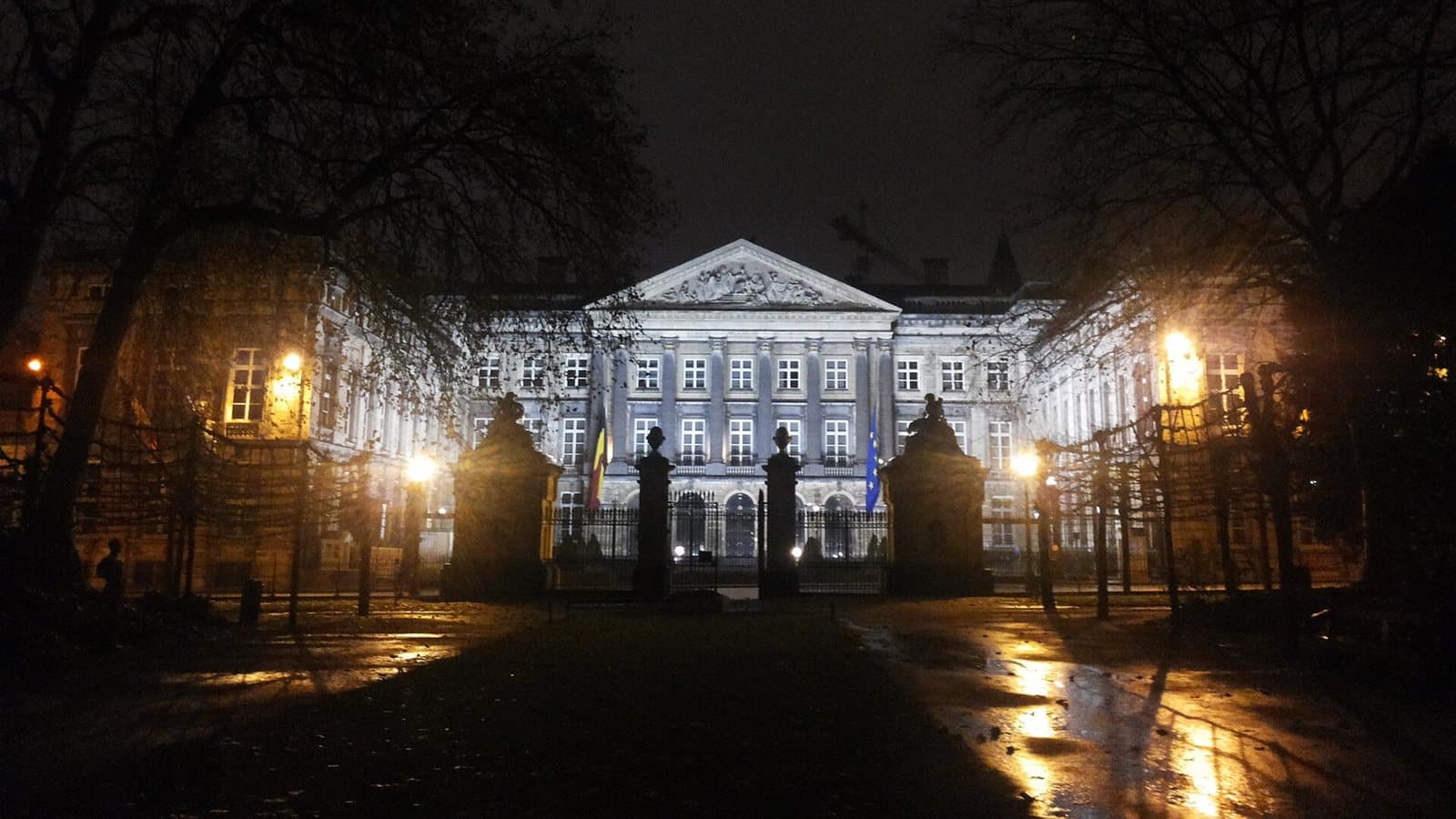
After the federal election of June 2010, Belgium spent 541 days without a full government before the Di Rupo cabinet was sworn in during December 2011. It was a world record for a democracy at the time, and it is the fact about Belgian politics that foreign readers are most likely to know.
It is usually told as a joke about dysfunction. It is more useful as a structural description. Belgium runs a proportional system across two separate electoral markets, Dutch speaking and French speaking, with almost no party competing in both. A federal majority therefore has to be assembled from parties that never faced the same voters, cannot punish each other at the ballot box, and answer to electorates whose priorities do not line up. Negotiations are slow because the arithmetic is genuinely hard, not because the negotiators are unserious.
The reason nothing collapsed is that the caretaker convention in Belgium is unusually capable. A government in current affairs continues to administer, pay, police and represent the country, and parliament continues to legislate. During the 2010 to 2011 period a caretaker cabinet took Belgium through a rotating presidency of the Council of the European Union and through decisions on a budget. The machinery was designed by people who expected this to happen.
The federal reforms of the last three decades reinforced the effect by moving a great deal of what governments actually do away from the federal level altogether. Education, transport infrastructure, economic development, housing and much of environment policy sit with regions and communities that had functioning governments the whole time. A federal vacuum is not a national vacuum when the federal level is not where most of the delivery happens.
The limitation is equally real. A caretaker government cannot easily start anything, which means long formations postpone exactly the decisions that require political capital: pensions, tax reform, the long term budget path. The country keeps running. What it does not do is change direction, and the bill for a formation arrives later, in the form of reforms that were deferred rather than resolved.