
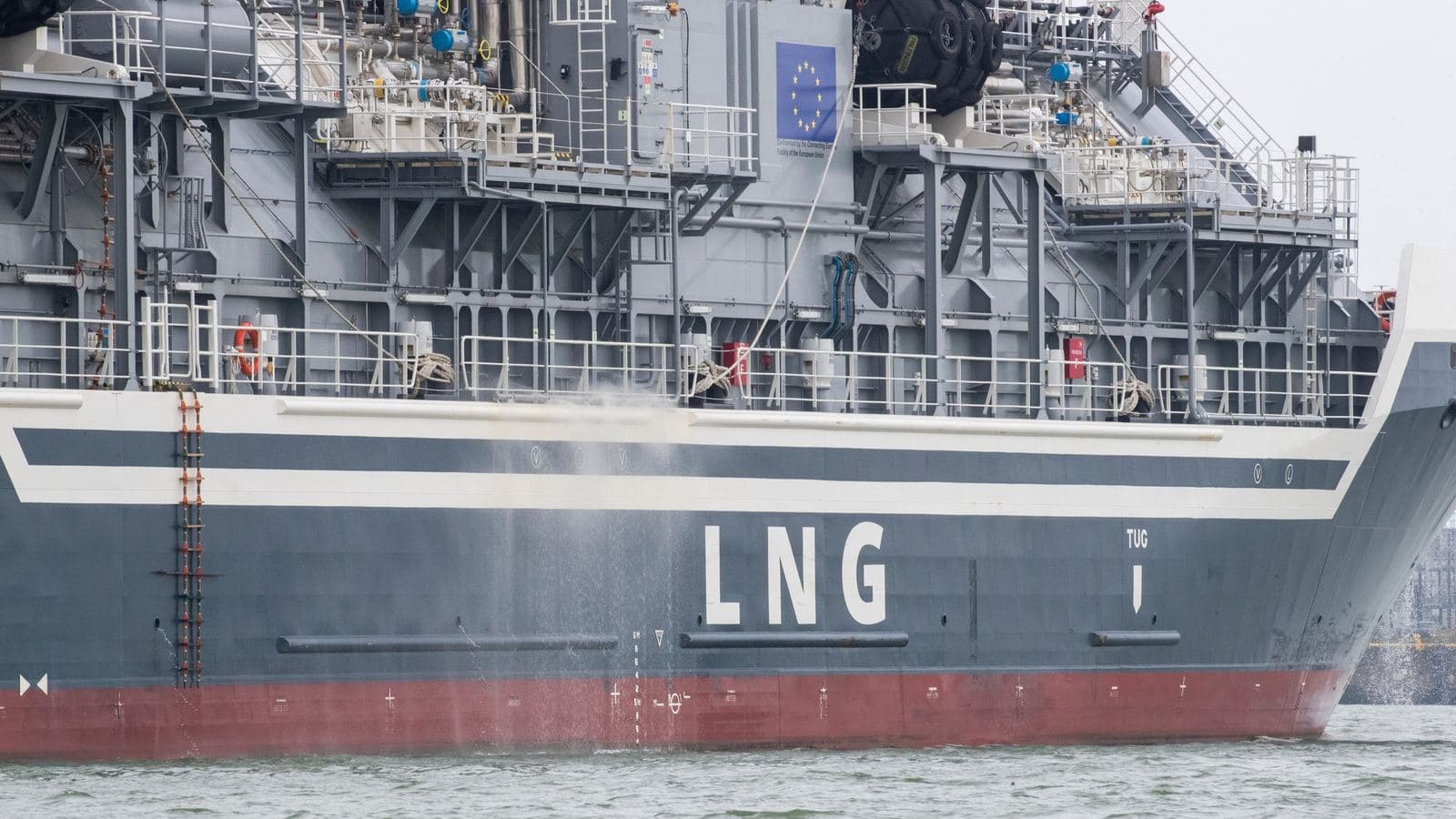
Belgium took all of its liquefied natural gas from Russia in July, according to data compiled by Bloomberg and reported by Belga. Total LNG flows into the country were more than 40 percent lower than a year earlier, and roughly 0.4 million tonnes came from Russia.
The share and the volume tell different stories, and the share is the one that will travel. Buyers across Europe have held off filling winter storage because prices have stayed high, driven by disruption to shipping through the Strait of Hormuz. When overall purchasing falls that far, what stops arriving first is the flexible spot cargo. What keeps arriving is whatever somebody is contractually obliged to take, and part of Belgium's contracted volume is Russian. A hundred percent of a much smaller number is a different fact from a hundred percent of a normal one.
It is still uncomfortable for European policy. Short term contracts for Russian LNG have been barred since April, ahead of a full ban that starts next year. The direction of travel is fixed and public, which is exactly why a month like July is politically awkward regardless of the tonnage behind it.
Belgium's position in this is unusual and easy to misread. It was the fourth largest LNG importer in Europe last year, which sounds like appetite and is substantially throughput: Zeebrugge is a transshipment and regasification hub serving a market far larger than the country itself. Gas that lands in Belgium is not necessarily gas that Belgium burns.
The other half of supply rarely makes the headline. Belgium also draws pipeline gas from Norway and the United Kingdom, so a figure describing LNG alone is not a figure describing the country's energy dependence. Both things can be true at once: Belgium is not reliant on Russia for its gas, and in July every LNG cargo it received was Russian.
The date that matters is next year's. Until the full ban takes effect, monthly shares will keep swinging on price and shipping conditions rather than on policy, and each swing will be reported as though it were a decision. The decision has already been taken; what is left is the calendar.