
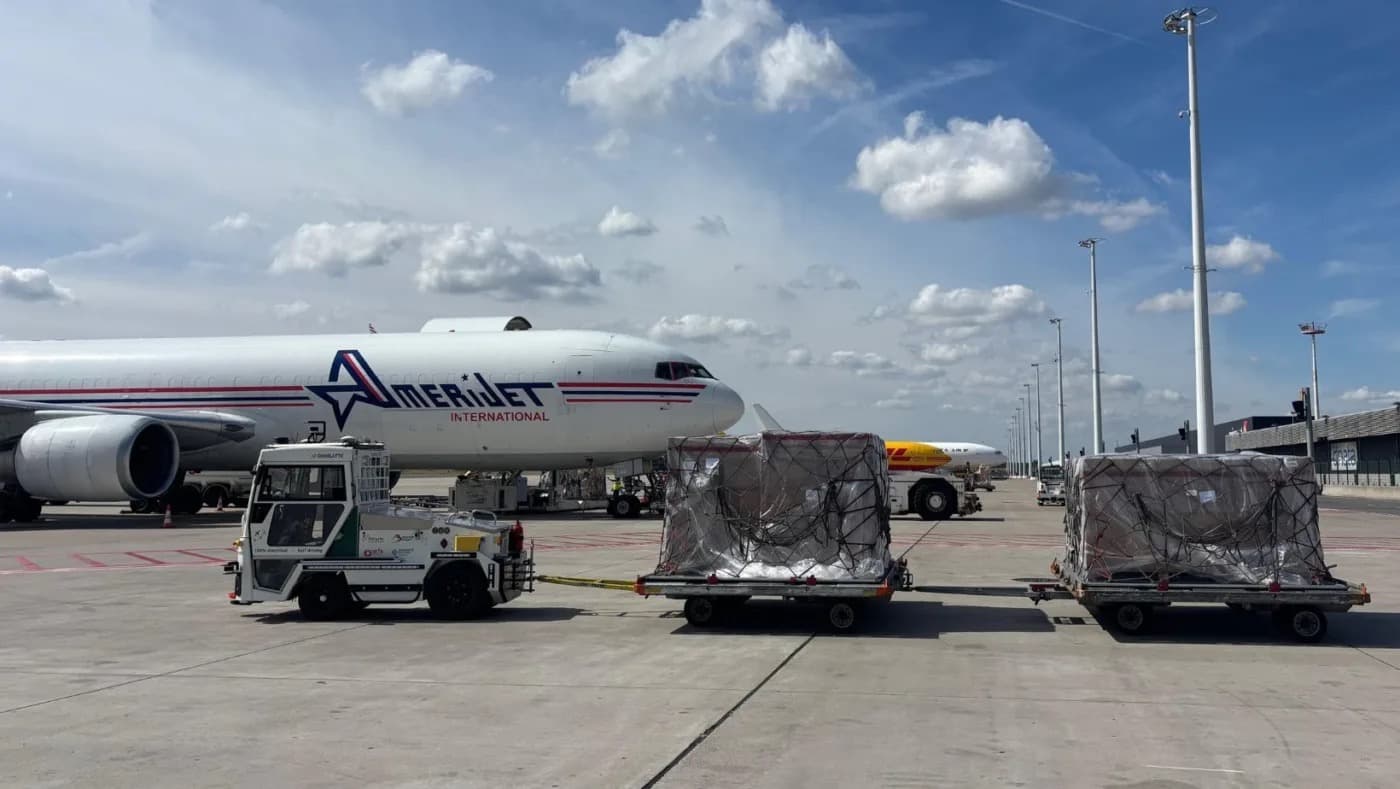
Brussels Airport has begun testing a self-driving electric tow tractor in its cargo zone, the first trial of autonomous ground handling equipment at a Belgian airport.
The pilot is being run jointly by ground handler WFS Cargo and Charlatte Autonom, a venture that pairs vehicle maker Charlatte Manutention with self-driving software firm Navya Mobility. The tractor is following four fixed routes between the airport's cargo warehouses and the aircraft aprons, and can pull as many as four loaded trailers at a time, moving at up to 12 kilometres an hour under autonomous control. Runs are currently limited to off-peak hours under controlled conditions.
Sensors and software, with a human still in the seat
The vehicle relies on satellite positioning and laser sensors to detect obstacles and other traffic, while Navya Mobility's driving software plots its route and reacts to the mixed pedestrian and vehicle activity typical of a working cargo ramp. For now a trained operator stays on board throughout every run and can take over at any point, and several WFS Cargo staff have already been trained to do so.
Brussels Airport chief executive Arnaud Feist said the trial was about building a clearer picture of what the technology can realistically offer. He said it would let the airport gain valuable insights into the potential of autonomous technologies, and into what they can deliver in terms of efficiency and sustainability.
The project sits inside Stargate, a European Commission backed programme aimed at greener, more efficient aviation. It groups 22 partners in total, including three other European airports and several airlines, all working on pieces of the same push toward lower emission ground and flight operations.